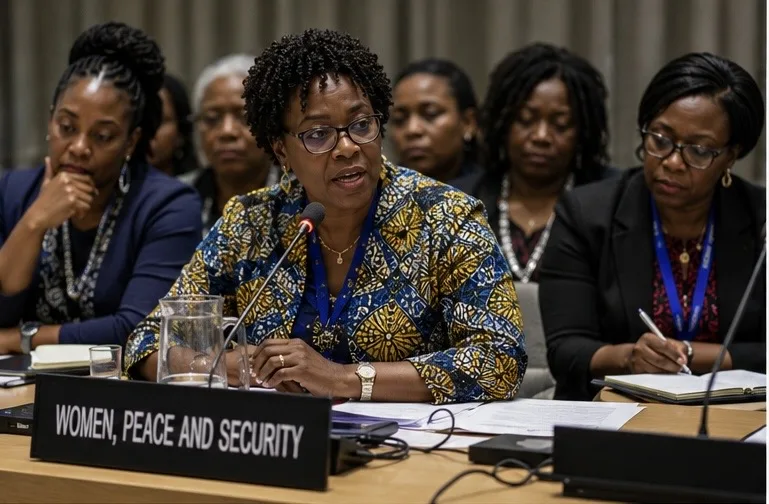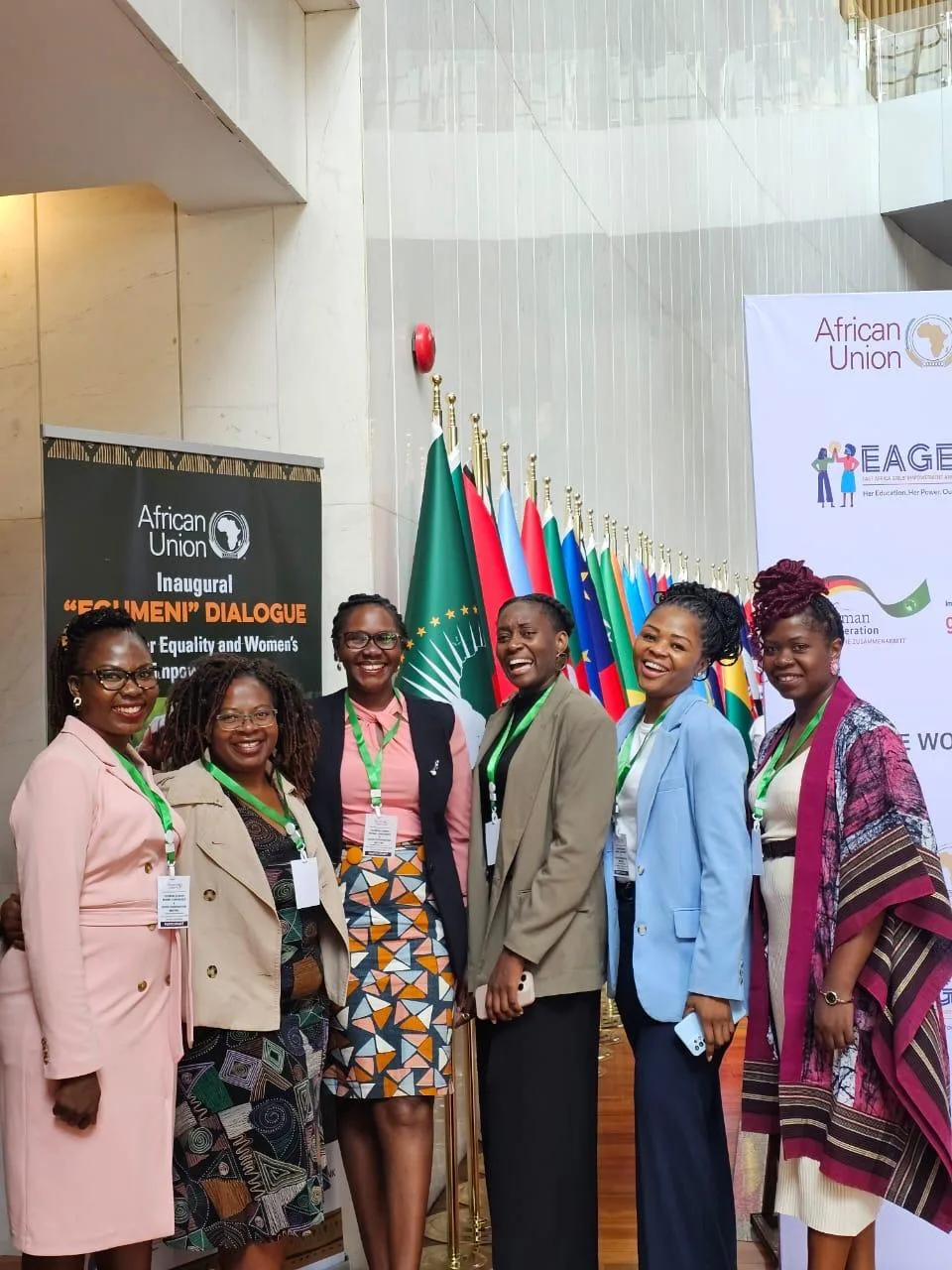
Researchers Without Borders participated at the inaugural Egumeni Dialogue on Gender Equality and Women’s Empowerment (GEWE), held from 29 to 30 September 2025 at the African Union Headquarters in Addis Ababa, Ethiopia. The Dialogue marked a historic moment for Africa, convening leaders, policymakers, civil society actors, youth representatives, grassroots organizations, development partners and academics to engage in bold conversations on the future of gender equality across the continent. Under the theme “Shaping Equitable Gender Norms: Advancing Women’s Agency and Opportunities in Africa,” the Dialogue provided a continental platform to confront regressive gender norms, protect Africa’s normative gains on women’s rights, and define actionable pathways for transformative change.
Designed as a space for critical reflection, the Dialogue explored the drivers of regressive gender norms such as the reinforcement of gender stereotypes, a persistent increase in cases of harmful practices and violence against women and girls – including intimate partner violence, female genital mutilation and forced/early marriage, barriers to women’s participation in political and leadership positions among others, while co-creating strategies to dismantle barriers to women’s empowerment including advancing civic engagement and political representation, increasing women’s access to productive jobs and financial opportunities, legal protection, gendered policy frameworks etc. It sought to align its discussions with African Union and United Nations policy processes, including the Specialized Technical Committee (STC), the Commission on the Status of Women (CSW), and other expert meetings, ensuring coherence in continental policy reforms. The Dialogue highlighted the latest evidence on how harmful social norms continue to impede girls’ and women’s empowerment, while also showcasing effective practices from across the region. It further enabled the development of actionable recommendations with AU Member States and stakeholders to counter these regressive norms and strengthen partnerships between governments, civil society, and the private sector, fostering deeper commitment to gender-responsive policies.
Key discussions emphasized both the progress and persistent challenges in advancing gender equality. While Africa boasts of robust legal instruments, including the Maputo Protocol, gaps remain between the implementation of policy frameworks and social norms. Regressive cultural and religious beliefs, alongside well-funded anti-rights movements, which, according to estimates, received over $700 million between 2009 and 2018, continue to undermine gains and infiltrate multilateral spaces, diluting gender equality discourse. Stakeholders stressed the need for stronger advocacy, solidarity, and protection of civil space to resist these push-backs.
While Africa boasts of robust legal instruments, including the Maputo Protocol, gaps remain between the implementation of policy frameworks and social norms.
Financing emerged as a critical theme, with participants highlighting the importance of moving from reactive donor dependency to domestic resource mobilization, gender-responsive budgeting, and progressive tax reforms. Investment in grassroots women’s movements and partnerships with the private sector were identified as key enablers for sustainable change. Evidence presented by the World Bank revealed gender disparities in education and economic aspirations in Africa, where 90% of girls expressed a desire to complete secondary education, yet fewer than one-third do so. Participants emphasized that addressing harmful norms requires engaging families, communities, and men as allies while strengthening pathways for women’s leadership and economic participation.
Youth inclusion and leadership accountability were also central to the discussions. Youth leaders reported the need for genuine participation beyond tokenistic representation, while stakeholders called for 50/50 gender parity in leadership, stronger accountability mechanisms, and public awareness campaigns to ensure that laws translate into tangible outcomes at the community level. Community-led initiatives from Niger, Malawi, and Madagascar demonstrated that combining education, economic empowerment, and community dialogue effectively addresses practices such as female genital mutilation and child marriage. Survivor-led storytelling as was showcased, proved to be a powerful tool for advocacy and awareness raising.
Economic exclusion and access to education and health were identified as persistent barriers. Women’s economic agency is often weakened by a lack of access to credit, high certification costs, and the dismantling of national gender ministries. Recommendations included restoring dedicated ministries, establishing women’s funds, and strengthening mentorship networks. Conflict and under-funding continue to threaten girls’ education and women’s health, with most countries in Africa still not meeting the Abuja Declaration pledge to allocate 15% of national budgets to health. Innovative grassroots solutions, including mobile courts and community-built menstrual hygiene facilities, demonstrated scalable approaches to address these gaps.
Violence against women, particularly in political spaces, was another key focus. Violence silences women leaders and deters political participation, making networks such as the African Women’s Leadership Network (AWLN) critical for solidarity and rapid response. Stakeholders emphasized breaking stigma, naming perpetrators, and strengthening survivor support systems as urgent priorities. Bridging the gap between policy and practice remains a challenge, often due to weak coordination and limited resources. Civil society organizations stressed the need for complementary work with governments, flexible funding mechanisms, and the integration of African feminist research into policy. Technology was acknowledged as both an enabler and a barrier, requiring localized solutions to be effective.
…the inaugural Egumeni Dialogue signifies the beginning of a long-term continental movement to dismantle regressive norms and accelerate gender equality
The Dialogue concluded with concrete, continent-wide recommendations to accelerate gender equality. Participants called for a firm stance against anti-rights agendas, universal access to sexual and reproductive health and rights for women and girls, and inclusion of grassroots women leaders in all decision-making spaces. They emphasized the importance of integrating humanitarian, development, and peace-building programming, investing in education, STEM, entrepreneurship, and leadership for women and girls, promoting men and boys as allies in challenging patriarchal norms, establishing core funding for grassroots organizations and survivor centered support systems, restoring national gender ministries with dedicated budgets, expanding feminist research rooted in African realities, and institutionalizing the Egumeni Dialogue as an annual continental platform for sustained action.
Looking ahead, the inaugural Egumeni Dialogue signifies the beginning of a long-term continental movement to dismantle regressive norms and accelerate gender equality. With the AU Chairperson – H.E. Mahmoud Ali Youssouf pledging to champion the fight against push-back on gender equality, the Dialogue’s outcomes are poised to inform upcoming STC-GEWE sessions and discussions among Heads of State. As participants affirmed during the closing session, gender equality is not solely a women’s issue, but a collective struggle for justice and development. Sustained political will, community engagement, and innovative financing will be essential to defend hard-won gains and to build an Africa where women and girls thrive as equal partners in shaping the continent’s future.
Written by Susan Asio – Senior Policy Advisor, Researchers Without Borders