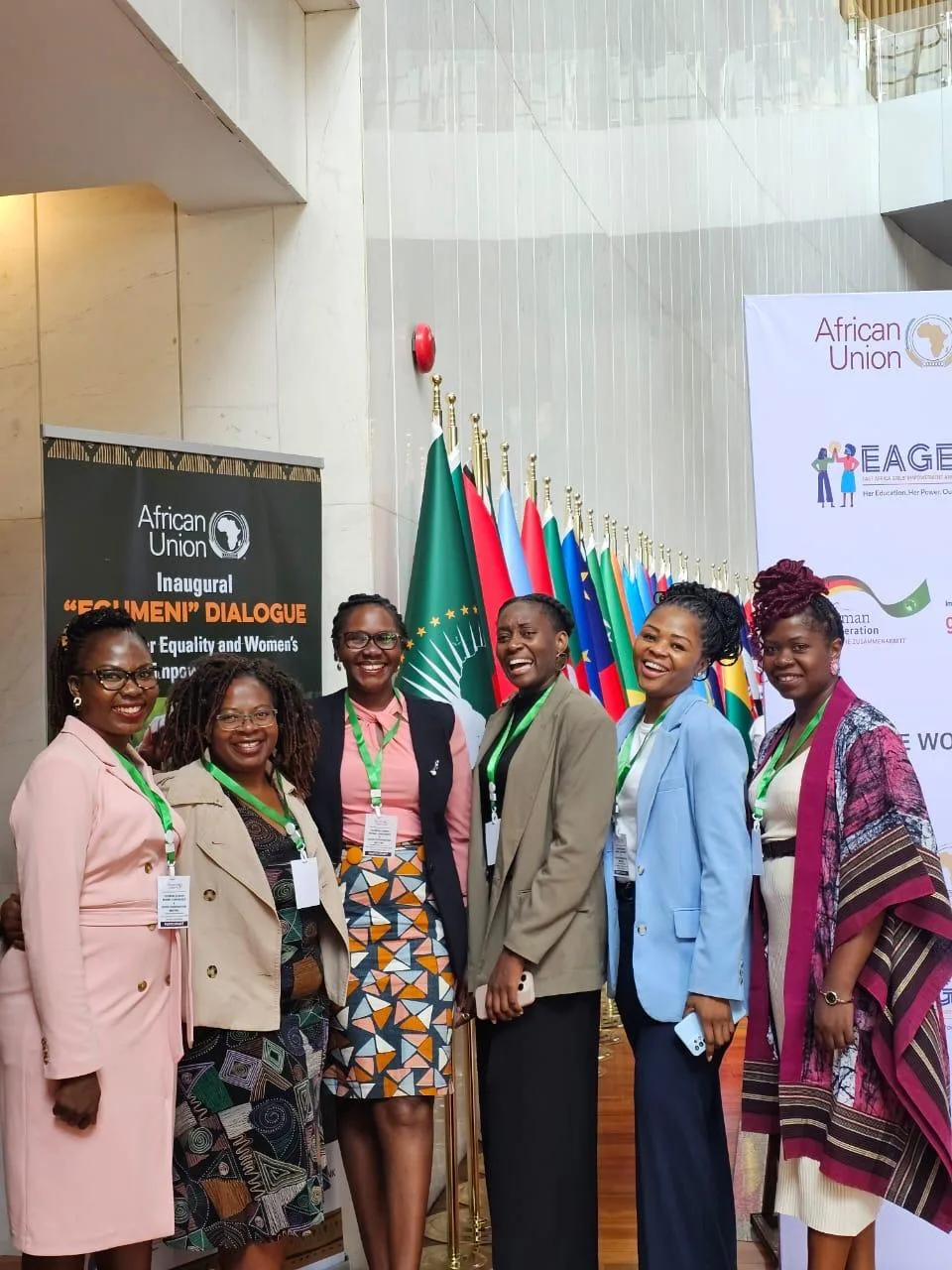
“Budgets are political documents,” emphasized Edna Akullo, Education Advocate at the United Nations Economic Commission for Africa. “Without young women actively analysing, influencing, and tracking them, commitments to gender-responsive WASH will never translate into real, lived change.” These words set the tone for the Gender Is My Agenda Campaign (GIMAC) Youth Advocacy Training on 6th February, where more than 120 young women from across Africa came together to equip themselves with the tools to transform policy promises into concrete action.
Across the continent, water is more than a utility but a lifeline. Yet, despite strong African Union (AU) frameworks such as Agenda 2063, the Africa Water Vision 2025, the Policy Framework and Strategy of the African Ministers’ Council on Water (AMCOW) and the Programme for Infrastructure Development in Africa (PIDA), millions of women and girls still bear the burden of water collection, and the jobs promised by water investments often fail to reach those who need them most. The training directly addressed this gap, showing participants how youth can move from passive beneficiaries to active agents of change.
Central to the training was the use of human rights mechanisms to strengthen water governance. Young advocates explored the African Commission on Human and Peoples’ Rights, the Maputo Protocol, and Special Rapporteur mandates, learning how these tools can hold governments accountable, protect the rights of women, girls, and marginalized communities, and guide advocacy at local, national, and regional levels. By connecting human rights standards with AU commitments, participants were empowered to translate policies into tangible action.
Interactive policy stations and national case studies provided practical experience. Youth analyzed implementation gaps in policies, identified barriers to gender-responsive and disability-inclusive service delivery, and mapped out advocacy strategies. As the trainers emphasized, understanding budgets is key: without monitoring how funds are allocated and spent, even the most progressive water policies remain promises on paper.
A key highlight was the focus on the AU narrative “Investing in Water is Investing in Jobs.” Participants discussed how water infrastructure can create employment opportunities especially for women and youth, but only if financing decisions are equitable and inclusive. By linking budget literacy to job creation, the training illuminated how young advocates can ensure that investments benefit those who have historically been left out of economic opportunities.
The training also underscored the importance of youth-led accountability. By equipping participants with tools for budget tracking, policy analysis, and advocacy, the session reinforced a central truth: investing in water without empowering young people to influence governance is investing in unfulfilled promises. As one participant reflected, the real power of the training was learning how rights, budgets, and advocacy intersect to create sustainable, inclusive development.
As Africa looks toward 2026, the call is clear: budgets are political, water is a right, and young people are the bridge. Through initiatives like the GIMAC Youth Advocacy Training, young women and men are translating AU commitments into action, ensuring that water investments are not just about taps and pipes, but about jobs, equity, and justice for all.
By Lorraine Mashizha