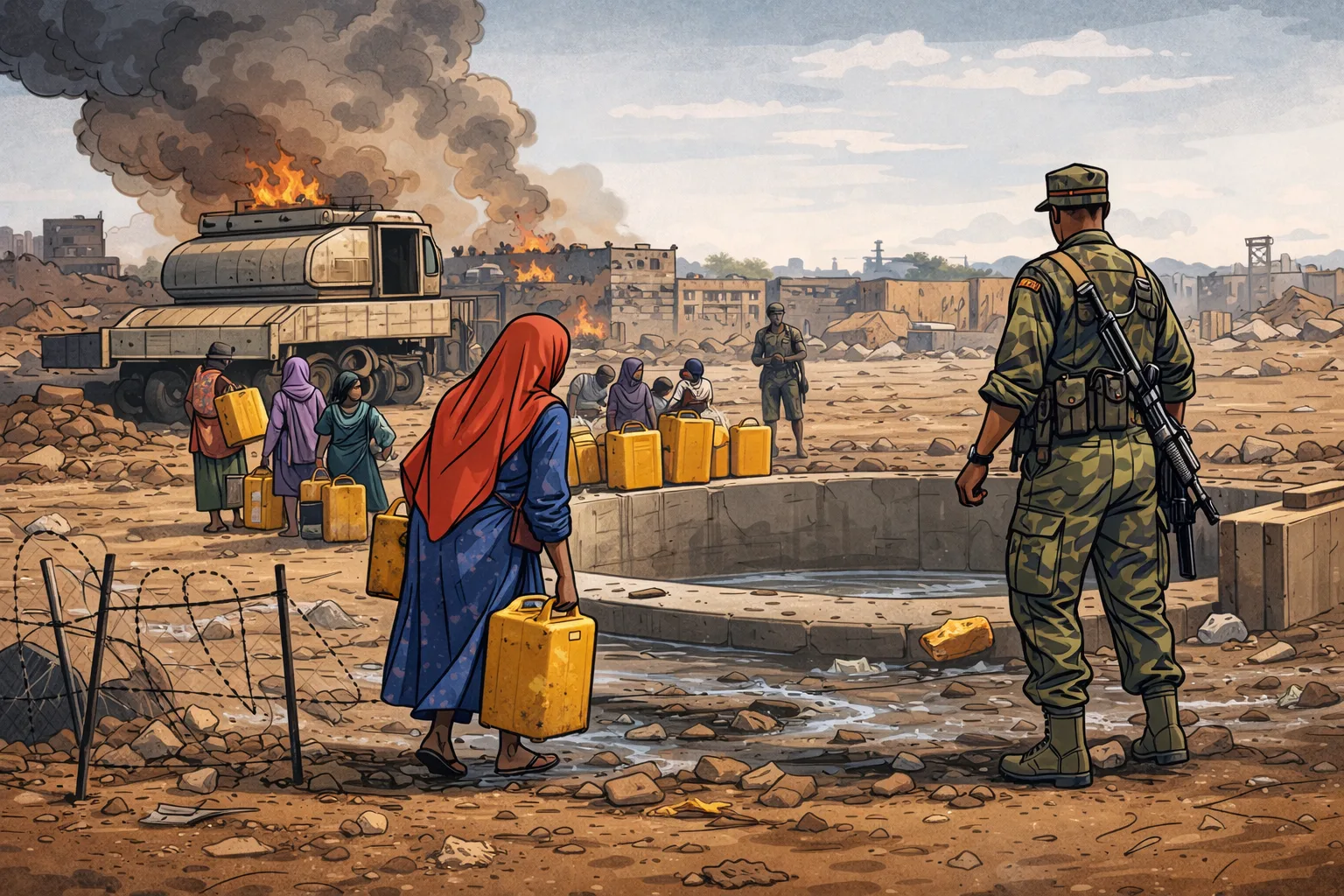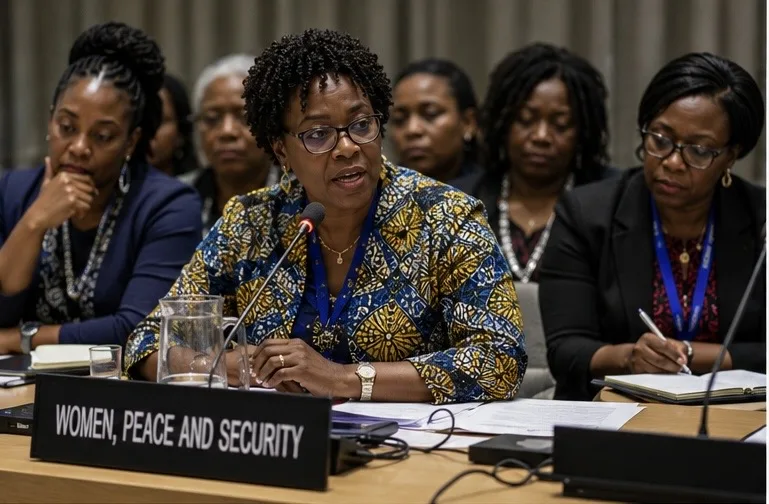
The relationship between gender, peace, and security has emerged as a critical area of inquiry and policy development over the past two decades. The adoption of United Nations Security Council Resolution 1325 (UNSCR1325) in 2000 marked a watershed moment, formally recognizing women’s roles in conflict prevention, peace negotiations, and post-conflict reconstruction[1]. This resolution, along with subsequent WPS resolutions, established a normative framework that challenges traditional security paradigms and calls for women’s meaningful participation in all aspects of peace and security governance. In response many countries in Africa more than 30 of them as of today and most regional economic communities have developed national or regional action plans for the implementation of the WPS agenda.
Despite this normative progress, women remain significantly underrepresented in formal peace processes. Research indicates that women constituted only a small fraction of negotiators, mediators, and signatories to major peace agreements throughout the 1990s and 2000s[2]. This exclusion is particularly problematic given emerging evidence that women’s participation correlates with more durable and comprehensive peace agreements[3]. The disconnect between policy commitments and implementation realities raises fundamental questions about the barriers to women’s inclusion and the mechanisms through which meaningful participation can be achieved.
Across roles and experiences, a shared frustration emerged during REWiB’s Knowledge Fireplace, a space that allows staff to interrogate the women, peace and security agenda from diverse perspectives. Women are in the room, but who is setting the agenda? Women are consulted, but whose priorities are implemented? Women are visible, but who holds decision-making authority? Scholars such as Paffenholz et al. note the importance of moving beyond simply counting women to assessing their actual inclusion and influence on peace negotiations[4].
The lack of substantive participation of women is not a failure of inclusion, it is a failure of transformation. The concept of conflict transformation, as distinct from conflict resolution or management, emphasizes addressing the root causes of conflict and transforming relationships, structures, and cultures that generate violence[5]
What UNSCR 1325 assessments reveal is the limitation of traditional peace and security mechanisms. It exposes a system historically designed around state actors, formal institutions responsible for formal peace agreements, and militarized understandings of conflict that continue to prioritise militarised responses and ignore the transformative ability of the WPS agenda. Within this system, power is centralized, elite-driven, and often disconnected from the lived realities of those most affected by insecurity and conflict.
The Resolution aimed to challenge the traditional peace building model by insisting that women belong in these spaces. But it did not fundamentally dismantle the assumptions underpinning them. In practice, this has often meant adding women into existing systems without necessarily redefining those systems. War is still framed in ways that prioritise armed conflict over everyday insecurity. Peace is still negotiated in rooms far removed from communities. Power is still treated as something to be shared selectively, rather than redistributed. In this sense, UNSCR 1325 opened the door, but it did not redesign the house.
This is where the tension within current WPS frameworks becomes clear. Are spaces for transformation being created or it is simply the expansion of the boundaries of tokenism? The answer, as our discussion revealed, is both.
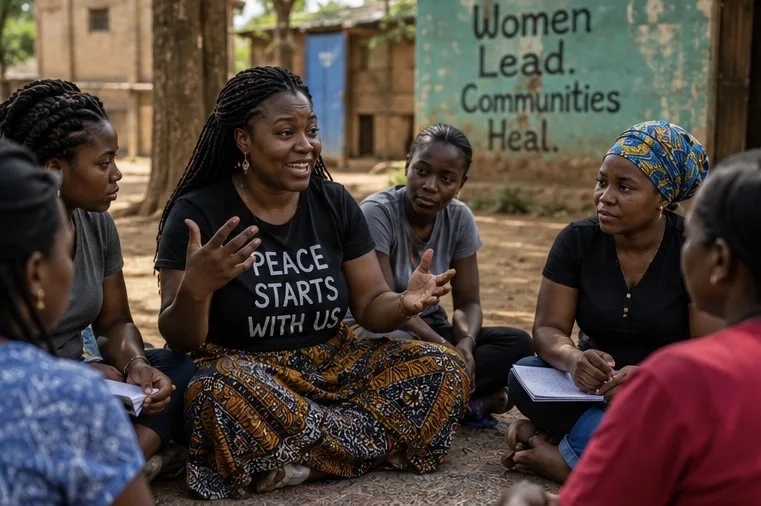
There are undeniable gains. UNSCR 1325 has helped to profile the need for women’s participation in peace and security processes. Women are no longer completely excluded. Gender is now part of the language of peace and security. But inclusion has been institutionalised in ways that are often procedural rather than political. Inclusion is measured in numbers, not influence, in attendance, not authority, reinforcing a fixation on counting how many women are in meetings rather than whether power is being redistributed and what contribution women bring to the table.
Tokenism thrives in this space. It allows systems to appear progressive without confronting the deeper question of who has power, who doesn’t have, and why.
This illusion of inclusion is dangerous as it creates the appearance of progress while leaving underlying inequalities intact. There is a way in which it allows institutions to claim success without disrupting the structures that marginalize women in the first place and diverts attention from shifting power where women are already building peace.
The Continental Results Framework (CRF) developed by the African Union Office of the Special Envoy on Women, Peace and Security, reflects a form of continental ownership and puts in place an accountability and reporting mechanism on the WPS agenda in Africa. The CRF moves beyond global abstractions by grounding WPS in African realities recognizing the importance of women lived experiences, informal peacebuilding, and community resilience. It acknowledges specific social, political and economic contexts as African women experience them
However, many of the indicators count numbers and the framework relies on state reporting mechanisms, which are often disconnected from grassroots experiences. The CRF privilege what can be counted over what matters, again reproducing a focus on numbers. It does not capture informal peacebuilding mechanisms, shifting power dynamics, or the quality of women’s participation; and do not fully account for intersectionality and often continue to treat women as a homogeneous group.
There are also critical gaps that remain unaddressed in most national action plans and regional action plans for the implementation of the WPS agenda. For instance, these frameworks do not encourage or enable women’s participation within political parties, where much of formal political power is negotiated and consolidated. Most of the indicators do not assess women’s participation within political parties.
If WPS is to be meaningful, the way we measure progress must be transformed. Measurement frameworks must move beyond technocratic indicators to embrace approaches that are politically grounded, context responsive and community owned. It is not enough to count policies adopted; we must assess whether women actually feel safer in their communities. It is not enough to measure women’s presence in meetings; we must understand whether they genuinely influence decisions and shape outcomes. It is not enough to track budget allocations; we must determine whether resources reach grassroots women’s organizations and strengthen their agency and leadership. Transformative WPS measurement should capture lived realities, shifts in power, and the everyday experiences of peace, security, and justice.
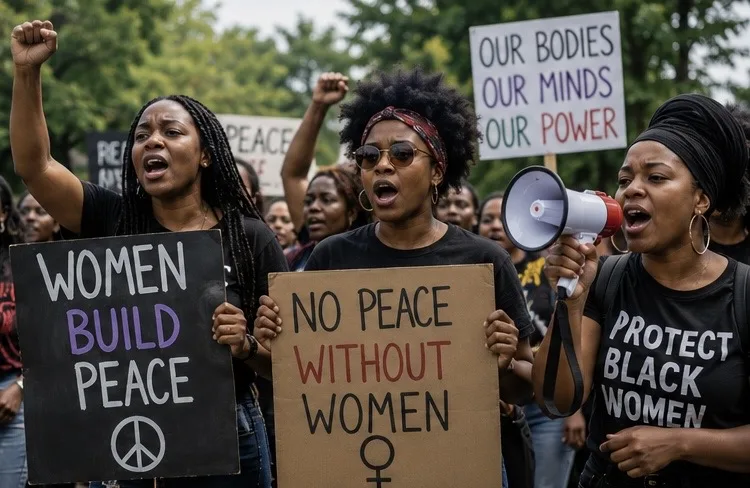
We recommend a community-led monitoring mechanisms that are designed, implemented, and sustained by local actors can provide a more accurate and accountable picture of progress. Such indicators will reflect the lived realities of communities and not just institutional performance. These indicators should inform continental processes.
If we cannot redistribute power, if we cannot hold governments accountable, and if we cannot use the lived experiences of women to make structural changes, then there will be no meaningful change.
If United Nations Security Council Resolution 1325 is to remain relevant, it must be reclaimed. Reclaimed as a political project and not just a policy framework. As a demand for accountability and not just participation. This means asking harder questions: Who controls resources? Who defines peace priorities? Who benefits from the current systems.
At REWiB, we believe that peace without power is not peace, it is merely the preservation of the status quo. Sustainable peace requires transforming the unequal structures that shape whose voices are heard, whose security is prioritized, and who has the power to influence decisions. Anything less falls short of justice and meaningful change.
[1] R. Baksh, L. Etchart, A. Onubogu, and T. Johnson, “Gender mainstreaming in conflict transformation: Building sustainable peace,” Commonwealth Secretariat, 2005
[2] W. Ellerby, “(En) gendered Security? The Complexities of Women’s Inclusion in Peace Processes,” *Security Dialogue*, vol. 44, no. 4, pp. 353-369.
[3] M. Alwis, L. Maunaguru, P. Rajasingham-Senanayake, and A. Thiruchandran, “Women and peace processes,” International Centre for Ethnic Studies
[4] T. Paffenholz, N. Ross, S. Dixon, A.-L. Schluchter, and J. True, “Making women count—not just counting women: Assessing Women’s Inclusion and Influence on Peace Negotiations,” UN Women and the Graduate Institute of International and Development Studies
[5] R. Baksh, L. Etchart, A. Onubogu, and T. Johnson, “Gender mainstreaming in conflict transformation: Building sustainable peace,” Commonwealth Secretariat, 2005.